Station Park in Farmington makes daily life feel easier. You may be looking for a shorter errand loop, a more flexible commute, or a home base that feels more connected than a typical subdivision. Living near Station Park can offer that mix of convenience, access, and variety, along with a few tradeoffs worth understanding before you buy. Let’s dive in.
Why Station Park stands out
Station Park is not just a shopping destination but is identified as Transportation Mixed Use. This matters because this designation allows for a blend of residential, commercial, civic, office, entertainment, retail, and restaurant uses, along with medium-high to high-density housing. In plain terms, you are looking at one of the most mixed-use and transit-linked pockets in Davis county.
Everyday convenience near Station Park
One of the biggest benefits of living near Station Park is how many daily needs can be handled in one area, including grocery, dining, retail, entertainment, fitness, banking, medical, and office services.
Examples include Harmons Grocery, Cinemark, Apple, REI, Nike Factory Store, Starbucks Drive-Thru, Twigs Bistro, Zao Asian Café, Station Park Dental, and the University of Utah Health Center. For you, that can mean fewer separate trips across Davis County and a simpler weekly routine.
What this changes in real life
When a neighborhood has groceries, meals, errands, and services close together, your schedule often feels more manageable. You may be able to combine shopping, appointments, and dinner into one outing instead of planning around several stops.
This setup also creates more daytime and evening activity than a purely residential area. Station Park is better described as a convenience-first district, so you should expect more motion and more people out and about than you would in a regular subdivision.
Commuting options in Farmington
For many buyers, the location near Station Park is about more than shops and restaurants. It is also about access.
UTA’s FrontRunner commuter rail serves Farmington Station and runs from Ogden to Provo. Service currently operates Monday through Saturday, with 30-minute weekday peak service and 60-minute off-peak and Saturday service.
Even if you don't use transit every day, having a station nearby can be a meaningful advantage, especially if you want another way to move between Davis, Weber, Salt Lake, and Utah County destinations.
Driving access and regional connections
If you commute by car, Station Park sits at the crossroads of I-15, Legacy and Highway 89.
The city’s planning department also calls for expanded shuttle service and better pedestrian and bicycle connections. That tells you Farmington is planning for a more connected district, not a car-only environment.
Housing options near Station Park
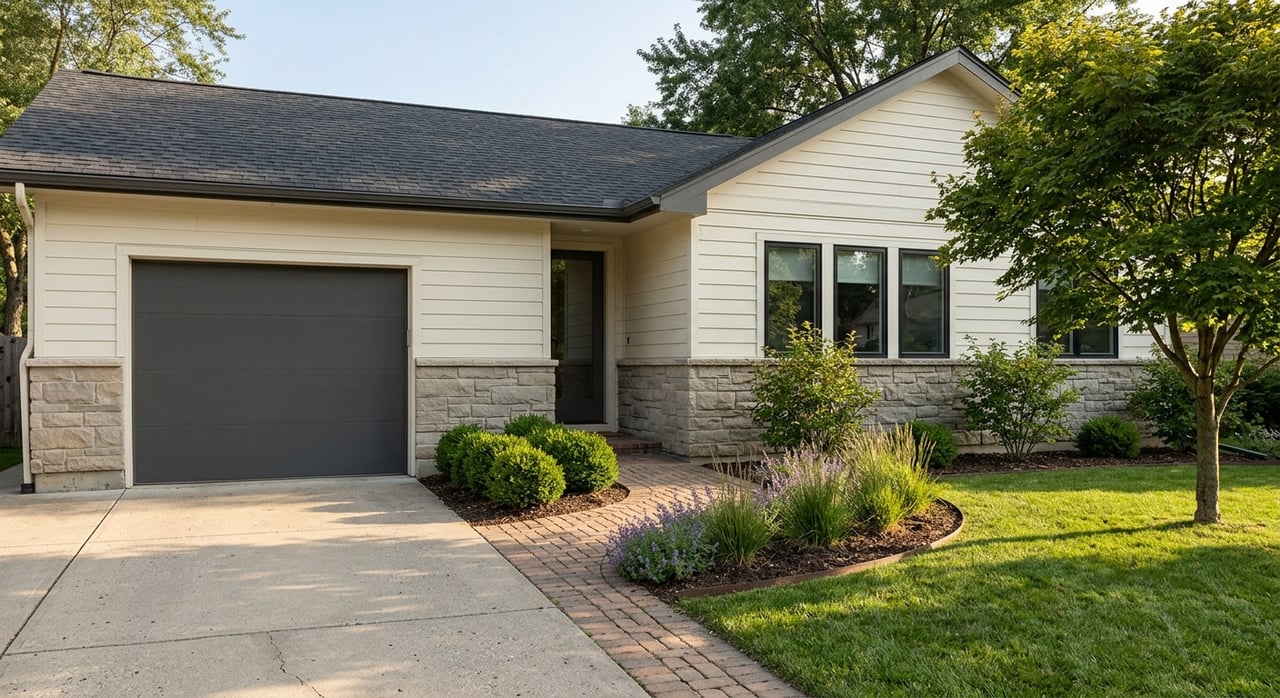
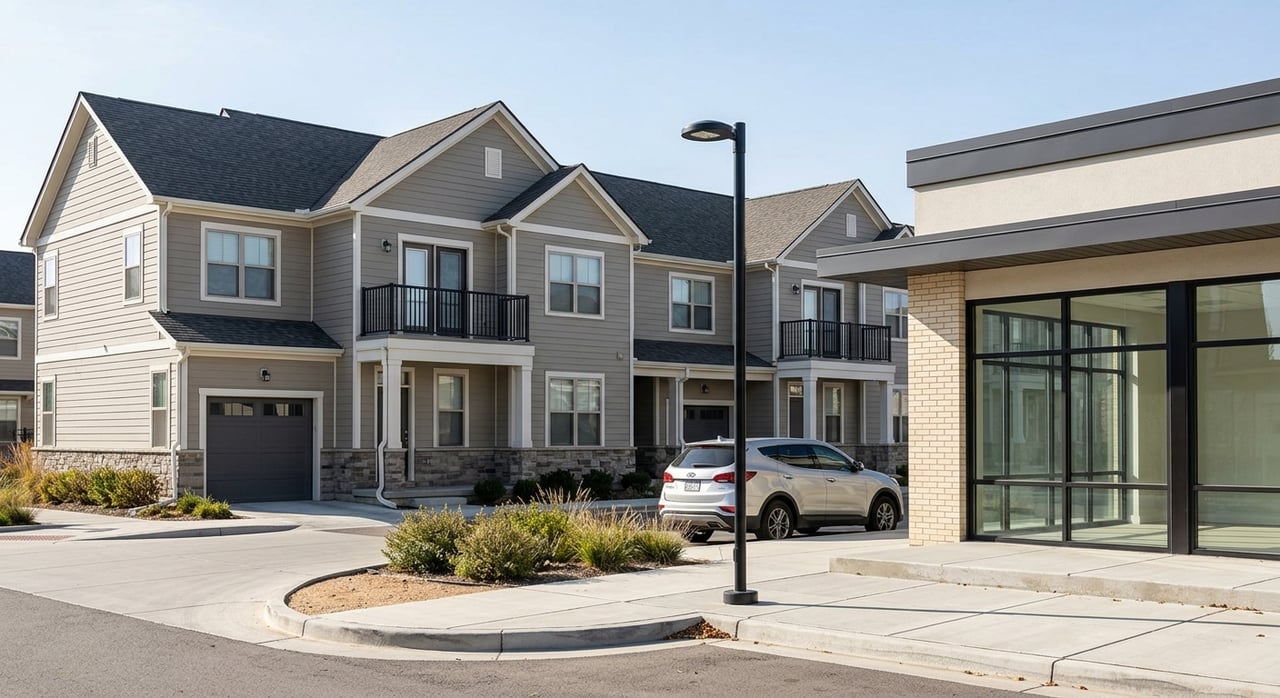
If you are trying to picture the housing mix near Station Park, variety is one of the clearest themes. Using Farmington’s northwest quadrant as the closest city planning proxy for the area, the housing mix is 45% single-family, 23% duplexes and townhomes, and 32% apartments.
Compared with other parts of Farmington, that is a more diverse mix. In practical terms, you are more likely to find apartments, townhomes, and some detached homes within a relatively short distance of one another instead of one dominant housing type.
Who this area may appeal to
That mix can be helpful if you are still deciding what kind of home fits your season of life. A first-time buyer may appreciate having townhome and condo-style options nearby, while a move-up buyer may want to stay close to the area’s convenience while looking at detached homes in surrounding parts of Farmington.
It can also help if you are comparing lifestyle tradeoffs, not just square footage. Some buyers are willing to choose a smaller home or attached housing if it means easier access to commuting, errands, and dining.
The feel of the area
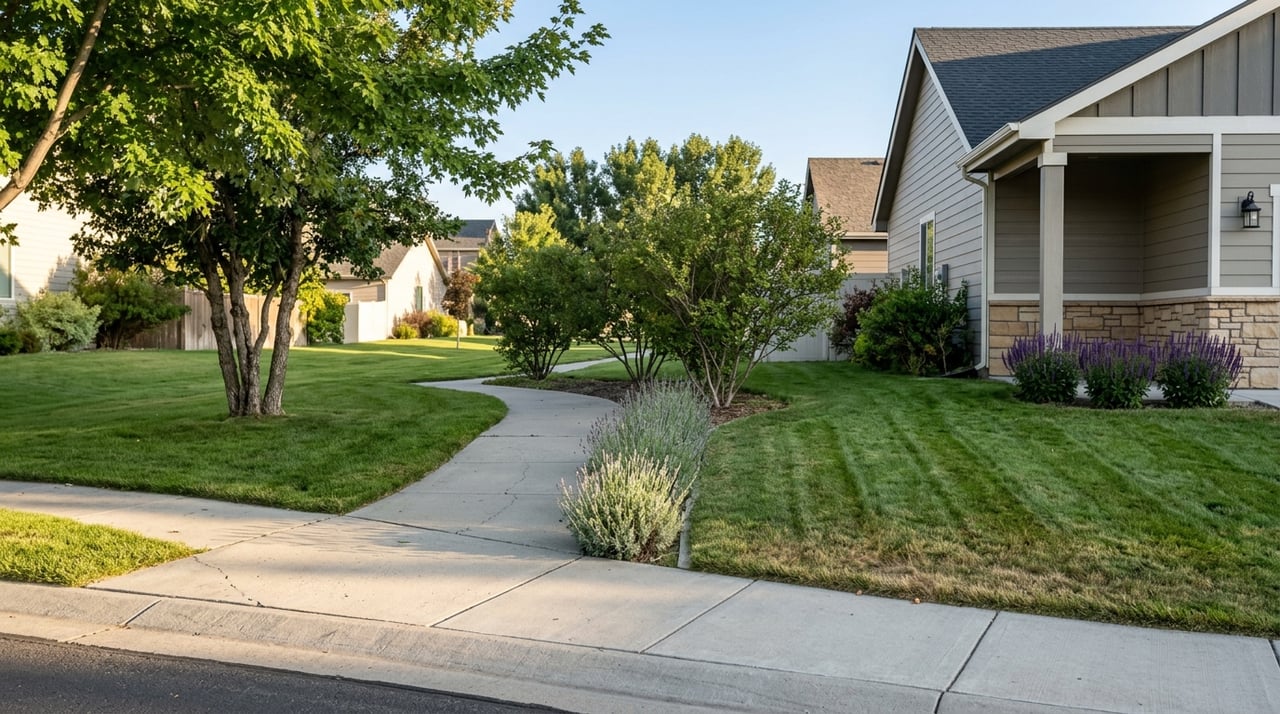
A common question is whether living near Station Park feels urban or suburban. The most accurate answer is that it sits somewhere in between.
Farmington as a whole is still largely suburban, but the Station Park area functions as a mixed-use center with more activity and a broader blend of land uses than many nearby neighborhoods. It is one of the places in the city where you can feel that transition most clearly.
Walkability and day-to-day movement
The mixed-use core around Station Park is generally the most walkable part of west Farmington. The city is also actively planning for stronger pedestrian, bicycle, and shuttle connections, which supports the idea of moving through the area in more than one way.
That said, walkability here does not mean every home nearby will have the same experience. Your day-to-day convenience can vary depending on exactly where you live in relation to the core, the station, and the main roads.
Tradeoffs to consider before you buy
Convenience is the headline benefit, but it is not the whole story. The Station Park area is an active growth node, with the North Station area seeing significant new development interest.
For you, that can mean an area with momentum, new projects, and long-term investment. It can also mean paying attention to traffic patterns, construction activity, and access changes that may come with growth.
Questions worth asking
Before buying near Station Park, it helps to think beyond the listing itself. Consider how you want your daily routine to feel and what tradeoffs you are comfortable making.
Questions you may want to ask include:
- Do you want quick access to shops, dining, and services?
- Would proximity to FrontRunner improve your commute?
- Are you open to attached housing, or do you want a detached home?
- How do you feel about living near an area with ongoing development?
- Would a more active setting fit your lifestyle better than a quieter subdivision?
Why local guidance matters here
Areas like Station Park can look simple on a map but feel very different block by block. Two homes may both be described as near Station Park, while offering very different access, noise levels, housing styles, and day-to-day experience.
That is where a thoughtful home search matters. If you are comparing Farmington neighborhoods, it helps to work with someone who can help you weigh convenience, home type, future potential, and the overall fit for your life.
Living near Station Park can be a smart choice if you want a connected location, a broader mix of housing options, and access to one of Farmington’s most active mixed-use areas. If you want help sorting through the tradeoffs and finding the right fit in Farmington or elsewhere along the Wasatch Front, Ame Lawlor is here to help.
FAQs
Is living near Station Park in Farmington convenient for daily errands?
- Yes. Station Park includes grocery, dining, retail, entertainment, banking, medical, and office uses, which can make it easier to combine multiple errands into one trip.
Can you commute by transit from Station Park in Farmington?
- Yes. Farmington Station is served by UTA FrontRunner, which currently offers Monday through Saturday service with 30-minute weekday peak service and 60-minute off-peak and Saturday service.
What types of homes are near Station Park in Farmington?
- The area is associated with a more diverse housing mix than many other parts of Farmington, including apartments, townhomes, duplexes, and single-family homes.
Does the Station Park area in Farmington feel urban or suburban?
- It feels like a middle ground. The area is a mixed-use, transit-oriented center within a city that is still broadly suburban.
Is the Station Park area in Farmington walkable?
- The mixed-use core is one of the more walkable parts of west Farmington, and the city is planning for stronger pedestrian, bicycle, and shuttle connections.
Are there tradeoffs to living near Station Park in Farmington?
- Yes. The biggest tradeoff is that the area is an active growth and development node, which can bring more traffic, construction, and day-to-day activity than a quieter residential area.