Relocating to a new city can feel exciting and overwhelming at the same time. If Clearfield is on your list, you are probably trying to figure out whether it offers the right mix of price, commute convenience, and everyday livability. This guide will help you understand how Clearfield fits into the Davis County market, what kinds of housing you will find, and what to think about before you buy. Let’s dive in.
Why buyers consider Clearfield
Clearfield is a mature northern Davis County city with an estimated 35,144 residents as of July 2025. It sits about 38 miles north of Salt Lake City, and the city reports that it is roughly 92% developed. That matters because Clearfield is not a blank-slate growth area. It is an established community where new housing is being added through redevelopment and infill rather than through endless outward expansion.
For many relocation buyers, Clearfield stands out because it offers a practical balance. You get strong access to major job centers and transportation routes, while home values tend to come in below many nearby Davis County cities. If your move is tied to work, budget, or a desire to stay connected to the larger Wasatch Front, Clearfield can be worth a close look.
Clearfield home prices in context
One of the biggest reasons buyers look at Clearfield is cost. On a recent Redfin market snapshot, Clearfield’s median sale price was $398,294 in April 2026, with a median of 39 days on market. That places it below nearby Layton, Syracuse, Kaysville, and Bountiful on price, while still showing a market that moves at a fairly competitive pace.
The Davis County Assessor’s 2025 annual report tells a similar story from an assessed value standpoint. Clearfield’s median assessed value was $402,000 for single-family homes and $278,000 for condos and attached townhomes. These are not sale prices, but they do help show Clearfield’s more affordable position compared with several nearby cities.
Here is the directional comparison:
| City | Single-Family Median Assessed Value | Condo/Townhome Median Assessed Value |
|---|---|---|
| Clearfield | $402,000 | $278,000 |
| Layton | $499,000 | $364,000 |
| Syracuse | $539,000 | $428,000 |
| Kaysville | $631,000 | $378,000 |
| Bountiful | $551,000 | $340,000 |
If you are relocating from a higher-cost area, Clearfield may feel like a more approachable entry point into Davis County. If you are moving locally, it may open up options for home size, type, or location that would be harder to find in nearby markets.
What kind of housing you will find
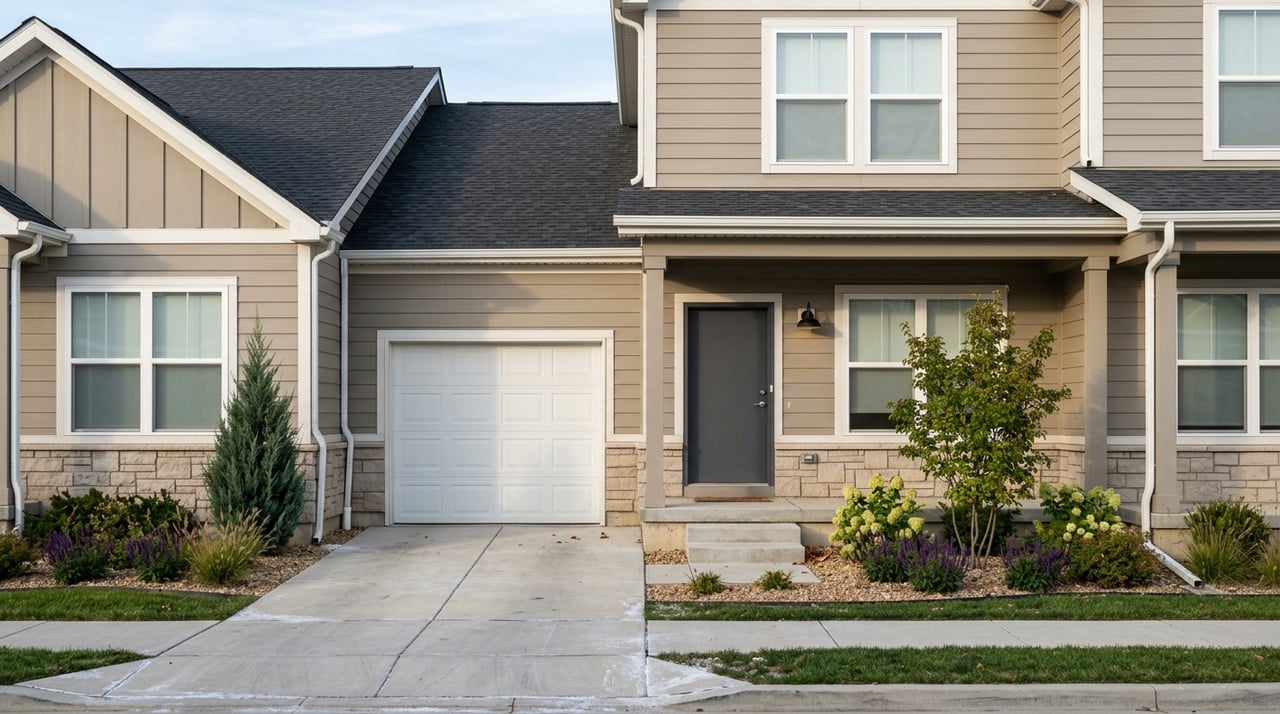
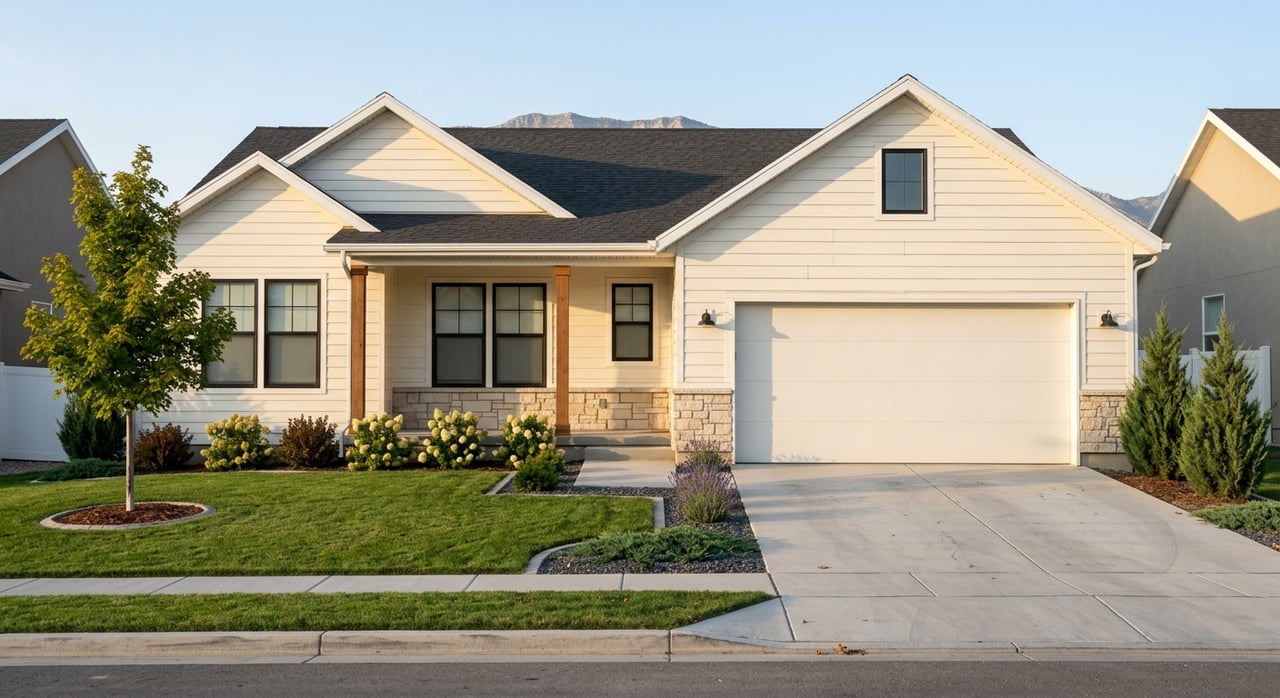
Clearfield offers a mix of older neighborhoods, attached housing, apartments, and newer redevelopment near the station area. That variety can be helpful if your needs are changing or if you want more than one path into homeownership. You are not limited to one housing style or one price tier.
The city’s planning department has made an intentional push toward mixed housing types. Its Downtown Form-Based Code is designed to support a vibrant mixed-use downtown, and the city’s Moderate Income Housing Plan supports higher-density housing near Clearfield Station and other commercial and employment centers. The city also allows ADU's (accessory dwelling units) in single-family and agricultural zones.
That planning direction is already showing up in real projects. Clearfield Station is planned as a transit-oriented development with about 1,000 residential units in townhomes and apartments, along with commercial, office, and park space. Lakeside Square is planned for 296 residential units plus commercial space and civic open space.
Other completed and active projects add to that picture. The Lotus Anthem redevelopment is complete and occupied with 211 apartments, 99 townhomes, and a half-acre city park. Bravada 193 is also complete with 328 apartments, while the city reports that several single-family developments, including Wilcox Farms and other subdivision-scale projects, are still moving forward.
What that means for relocation buyers
If you are relocating to Clearfield, you should expect a city with both established neighborhoods and areas in transition. Some parts of your search may feel more traditional and suburban, while others may reflect newer transit-oriented growth. That can be a plus if you want choices, but it also means each pocket of the city may offer a different feel, housing stock, and pace of change.
This is where local guidance matters. When you compare properties, it helps to look beyond the listing photos and ask how the surrounding area is evolving, what kind of housing is being added nearby, and how that fits your lifestyle. A home that feels average at first glance may have strong long-term appeal if it lines up with your commute and daily routines.
Clearfield commute and access
For many buyers, commute convenience is a major reason to consider Clearfield. Census QuickFacts shows a mean travel time to work of 21.8 minutes, which supports the idea that many residents can reach jobs without extreme drive times. The city’s location along I-15 and its access to rail and bus service make it especially relevant for households commuting along the broader north-south corridor.
Clearfield Station is located at 1250 S. State St. According to UTA, FrontRunner connects Ogden to Provo across an 83-mile corridor with 15 stations, free parking, and links to other UTA services. Service runs every 30 minutes during weekday peak periods and every 60 minutes during off-peak periods and on Saturdays.
UTA also lists Clearfield on Route 626, which connects Clearfield Station with West Roy, Weber State Davis Campus, the Freeport Center, Layton, Syracuse, West Point, and Clinton. If you want flexibility beyond driving, that adds another layer of convenience. Salt Lake International Airport can be reached in about 35 minutes via I-15 and FrontRunner.
Job centers that shape demand
Clearfield’s location is closely tied to major employment hubs. Hill Air Force Base borders the east side of the city and is one of Utah’s largest employers. The Falcon Hill project could add 6 to 8 million square feet of office and incidental retail over the next 20 years.
The Freeport Center is another major factor. Located in Clearfield, it reports more than 70 companies, over 7 million square feet, and more than 7,000 employees. For relocation households in defense, logistics, manufacturing, or related industries, Clearfield can make a lot of sense from a daily commute standpoint.
If your work is tied to these employment centers, buying in Clearfield may help you reduce drive time while staying connected to the broader Davis and Weber County markets. That combination is often part of the city’s appeal.
Smart questions to ask before buying
When you relocate to Clearfield, it helps to narrow your search around how you actually live. The right home is not just about square footage. It is about how the location supports your work, routines, budget, and future plans.
As you evaluate homes, consider these questions:
- How important is quick access to I-15, FrontRunner, or UTA?
- Do you prefer an established neighborhood or a newer mixed-use area near the station?
- Are you open to a townhome or condo if it improves your price point or commute?
- How much ongoing development nearby feels comfortable to you?
- Are you buying for immediate convenience, long-term flexibility, or both?
These are the kinds of questions that can save you from choosing a home that looks right on paper but does not fit your day-to-day life.
Why local perspective matters
Relocation decisions are rarely just about one data point. Price, commute, housing type, and neighborhood context all work together. In a city like Clearfield, where established areas and newer redevelopment overlap, the best choice often comes from understanding the tradeoffs clearly.
That is especially true if you are comparing Clearfield with Layton, Syracuse, Kaysville, or Bountiful. On paper, those cities may all seem close together. In practice, each offers a different price position, housing mix, and feel.
A thoughtful agent can help you sort through those differences, ask better questions, and spot potential you might otherwise miss. If you are moving to Northern Utah, that kind of preparation can make the process feel much more manageable.
If you are thinking about relocating to Clearfield, working with someone who knows Northern Utah can make it easier to match your budget, commute, and home goals with the right area. I bring a practical approach to buyer guidance and can help you look beyond the transaction to find a home that truly fits your next chapter.
FAQs
What should homebuyers know about Clearfield home prices?
- Clearfield tends to be one of the more affordable options in Davis County compared with nearby cities like Layton, Syracuse, Kaysville, and Bountiful, based on both recent sale price snapshots and county assessed value data.
What types of homes can buyers find in Clearfield?
- Buyers can find a mix of single-family homes, townhomes, condos or attached housing, apartments, and newer mixed-use development near Clearfield Station and other redevelopment areas.
What should commuters know about living in Clearfield?
- Clearfield offers access to I-15, FrontRunner service at Clearfield Station, and UTA Route 626, which can help with commuting to nearby job centers and other Davis and Weber County destinations.
What major employers are near Clearfield for relocating buyers?
- Hill Air Force Base and the Freeport Center are two major employment anchors near Clearfield, making the city especially relevant for households tied to defense, logistics, manufacturing, and related industries.
What makes Clearfield different from nearby Davis County cities?
- Clearfield generally offers lower entry pricing than several nearby Davis County communities and combines established neighborhoods with ongoing infill and transit-oriented redevelopment.
What should relocation buyers focus on when comparing Clearfield homes?
- Focus on commute patterns, housing type, budget, surrounding development activity, and whether you prefer an established neighborhood setting or a newer area near the station corridor.